

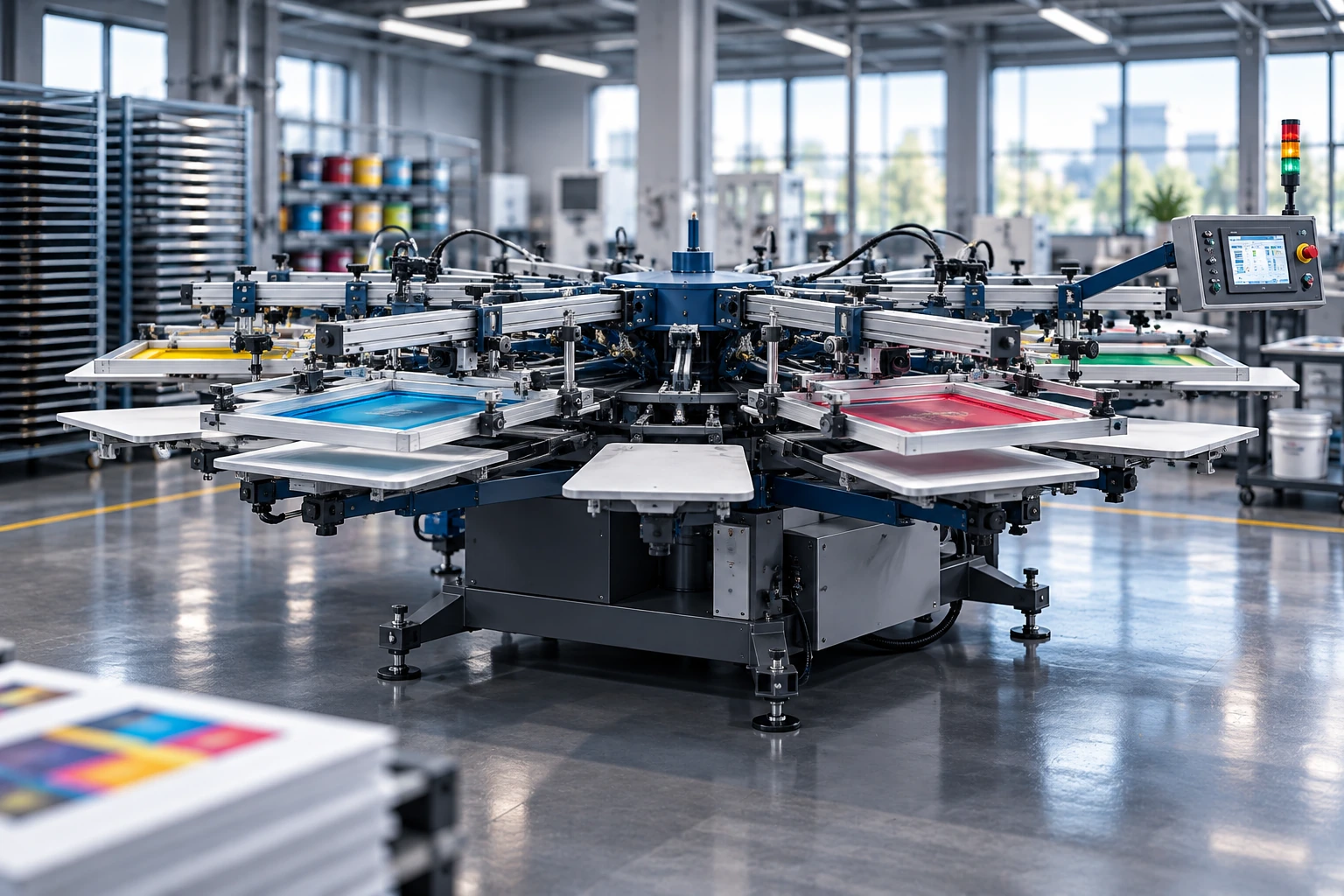
Prepare the stencil
A mesh and stencil are prepared for the artwork; open areas determine where ink can pass.
Type a keyword to search.
Ink passes through a stencilled mesh with a squeegee to create selected surface effects.
Screen printing forces ink through the open areas of a stencilled mesh onto a substrate using a squeegee. The stencil defines the image, while the ink deposit and material affect the finished surface.
For labels, it can be considered for selected highlights, opaque colours or tactile surface effects.
A mesh and stencil are prepared for the artwork; open areas determine where ink can pass.
The squeegee pushes ink through open mesh areas onto the material below.
Ink is dried or cured as required, then surface quality and registration are checked.
Logos, patterns or design areas with a distinct surface treatment.
Colour fields requiring coverage on suitably matched substrates and inks.
Noticeable ink deposits where artwork and material allow.
Mesh count, stencil, ink and material affect detail and ink-film thickness. Not every effect is suitable for every surface; evaluating a sample can help.
A perceptible ink layer is possible with suitable inks and stencils, but the result varies by application.
Detail depends on mesh, stencil, ink and stock. Small lettering and fine lines should be checked in advance.
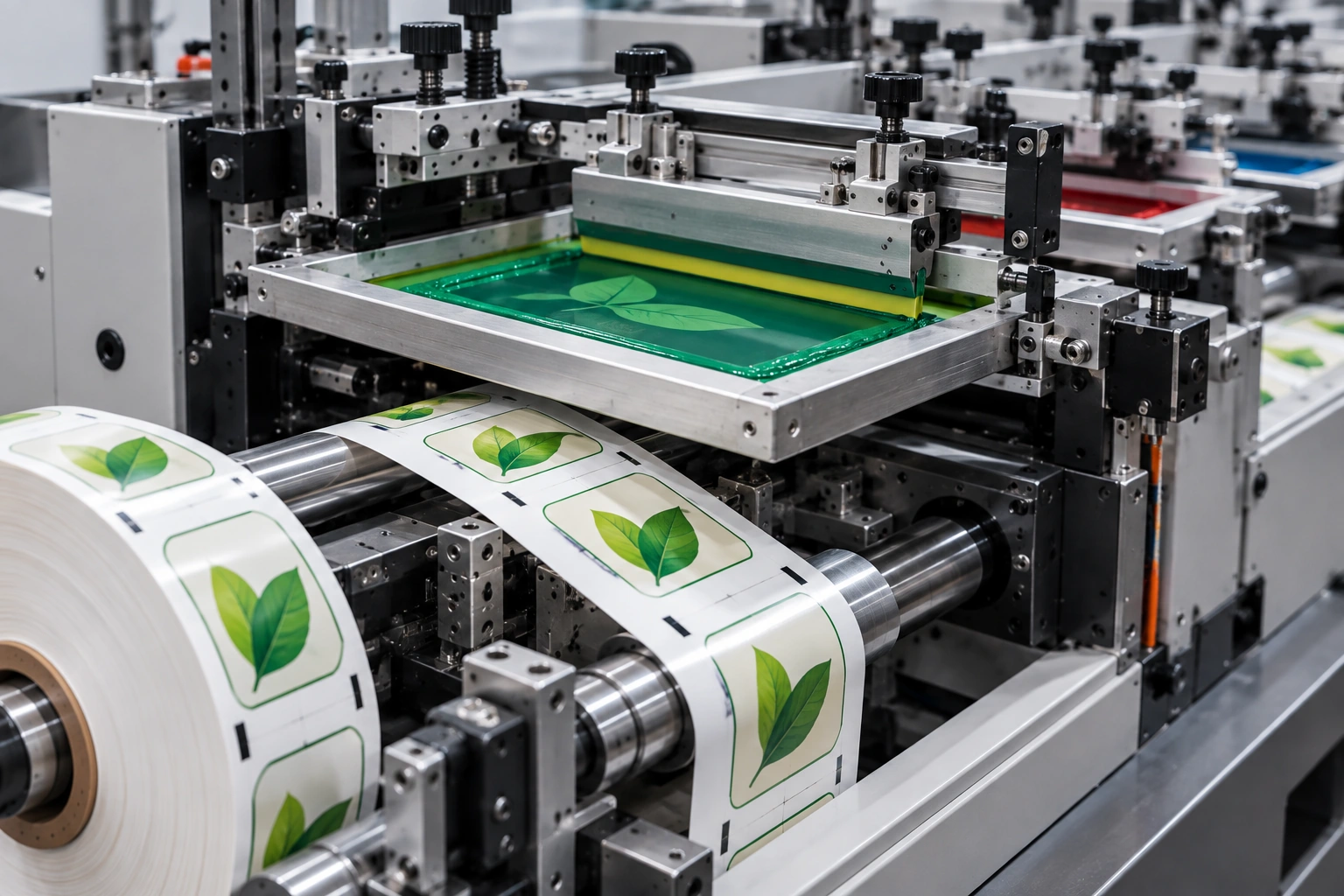
Screen printing offers tactile surface effects; the suitability of finishes depends on your material and artwork.
Explore our label guide ↗